
Hennessy, Billie
(b Carlow, 7 Oct. 1882; d New York 21 June 1929).
Painter and composer.
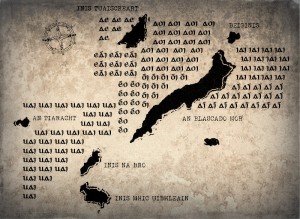
Hennessy trained at the Metropolitan School of Art in Dublin and at Vassar College in Poughkeepsie, New York. Hennessy’s work first came to attention through the endorsement of Hugh Lane, in particular through Lane’s purchase of her cubist series On Aran. In addition to the 14 paintings which make up the series, Hennessy composed a suite for multiple pianos titled On Aran Soundings (1906). The piece is designed to be performed by pianists positioned throughout a gallery in which the On Aran paintings are exhibited. As such it is considered an early proponent of intermedia composition.
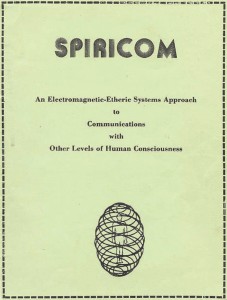
Hennessy’s compositional activities were secondary to her work as a painter, but she continued throughout her life to compose works, mostly for piano. On a trip to London in 1917 Hennessy was introduced to the concept of automatic writing by Elizabeth Forthnot, a member of George Hyde Lees’ social circle, and began to both paint and compose melodies in this mode. Hennessy called the melodies she composed in this way “Scripts”; according to her diaries she composed over 30, most of which have been lost. Hennessy’s manuscript for Script 4 runs to over 20 pages and was the result of an automatic writing marathon which took place in early 1918. The piece runs over 50 minutes in duration. A short excerpt, performed by Hennessy’s grand daughter Emer Tyrrell, is given here.
Hennessy’s early Scripts unfurl seemingly endless, meandering tonal single voice melodies, with apparently arbitrary moves to different keys. They are notable for their lack of standard compositional concerns, similar in this vein to the works of Erik Satie “…one finds jumpcuts, anti variation, non development, directionless repetition, absence of contextual relationships, logic, transitions” (Nyman 1999: 35). According to her diaries, Hennessy’s later Scripts departed entirely from any standard tonal models of the time, often alternating between sparse repeated motifs and extended passages of clusters, as in Script 23, “received” in 1926.
Select bibliography
Nyman, Michael. 1999. Experimental Music Cage and Beyond, Cambridge. Cambridge University Books.